
Government UFO Files Released
A New Era of Transparency or More Questions Than Answers?
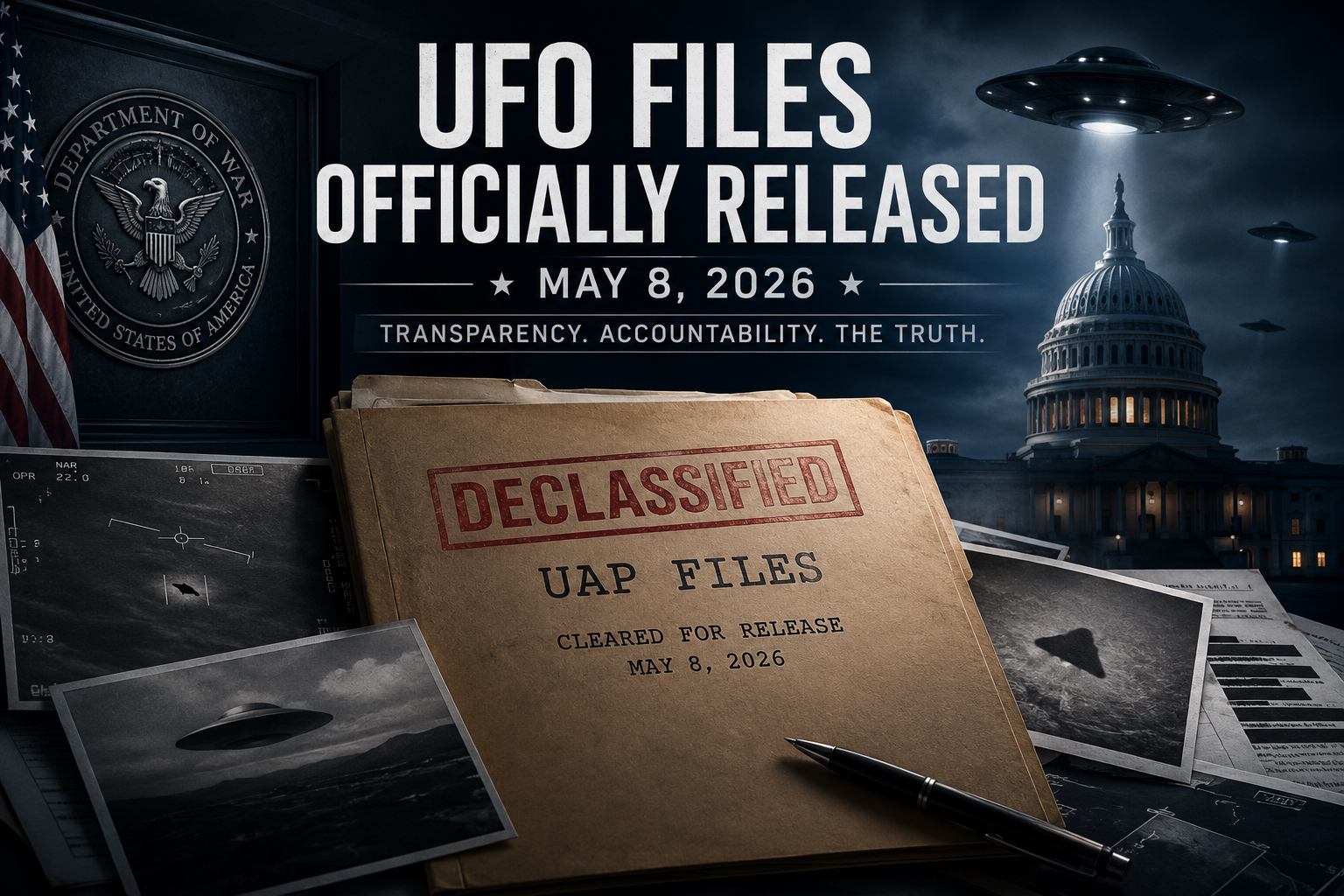
On May 8, 2026, the federal government announced what may become one of the most discussed disclosures in modern American history — the official public release of previously classified files related to Unidentified Anomalous Phenomena (UAP), more commonly referred to as UFOs.
According to the statement released by the Department of War, the initiative is part of a broader transparency effort directed by President Trump and supported by Secretary of War Pete Hegseth.
The official statement reads:
“The Department of War is in lockstep with President Trump to bring unprecedented transparency regarding our government’s understanding of Unidentified Anomalous Phenomena. These files, hidden behind classifications, have long fueled justified speculation — and it’s time the American people see it for themselves. This release of declassified documents demonstrates the Trump Administration’s earnest commitment to unprecedented transparency.”
The files were published through the Department of War’s official UAP archive portal:
Department of War UAP Release Portal
Why This Release Matters
For decades, discussions surrounding UFOs have existed in a strange intersection between conspiracy theories, military intelligence, scientific curiosity, and public skepticism. Governments worldwide have historically denied, minimized, or heavily classified investigations into unexplained aerial encounters.
However, recent years have changed that narrative dramatically.
Military pilots, radar operators, intelligence officials, and even members of Congress have openly acknowledged encounters with objects exhibiting flight characteristics beyond currently understood aerospace capabilities. Congressional hearings, whistleblower testimonies, and leaked footage helped move the subject from fringe culture into mainstream national security discussions.
This latest document release represents another major shift:
- Public acknowledgment that extensive classified investigations existed
- Increased pressure for governmental accountability
- Greater public access to historical UAP reports and intelligence analysis
- Renewed debate about national security implications
- Questions surrounding advanced foreign technology versus unexplained phenomena
Transparency vs. Controlled Disclosure
While supporters view the release as a historic transparency initiative, critics argue that governments traditionally control disclosure carefully — releasing only what they are prepared for the public to see.
Several questions remain unanswered:
- Are these all the files?
- Were documents redacted?
- Do agencies still maintain higher-classified programs?
- What technologies or incidents remain undisclosed?
- How much of the material involves foreign adversary surveillance technology?
Skeptics also note that transparency announcements can serve multiple purposes, including restoring public trust, redirecting narratives, or normalizing discussions previously considered politically sensitive.
National Security Concerns
One of the most important aspects of the UAP conversation is that many reported incidents originated from military environments.
This raises concerns far beyond extraterrestrial speculation:
- Unknown aircraft operating near military installations
- Potential surveillance by foreign governments
- Airspace vulnerabilities
- Sensor spoofing or advanced electronic warfare
- Emerging aerospace technologies not publicly understood
Regardless of the explanation, defense officials have increasingly framed UAP investigations as a legitimate national security issue rather than purely a scientific curiosity.
Public Reaction
Public reaction to the release has been divided:
- Some believe the disclosure validates decades of speculation
- Others remain skeptical and demand independent verification
- Researchers and journalists are now combing through the files for patterns and inconsistencies
- Social media has reignited debates around famous historical UFO cases
What was once considered taboo discussion has now become part of official government discourse.
The Bigger Question
Perhaps the most important takeaway is not whether the files prove extraterrestrial life exists.
The larger issue may be this:
Why were these files classified for so long, and what does that say about how governments manage information involving public uncertainty, national defense, and emerging technologies?
Whether the newly released documents provide definitive answers or simply deepen the mystery, one thing is clear: public interest in UAPs is no longer going away.
The conversation has officially moved from rumor to record.